
The Origin Story of Godspeed as a Streetwear Name
Streetwear culture eventually adopted “godspeed,” a term traditionally offered to travelers entering uncertainty prior to its life on clothing. Carrying real weight, it meant “may fortune ride with you” — a farewell reserved for journeys that mattered. That’s exactly why the word made its way into streetwear, a culture where clothing has always doubled as a statement of identity, intent, and momentum. Grasping what godspeed truly means clarifies why one word can anchor a whole clothing philosophy instead of just being a shirt’s decoration.
Borrowing weighty language has always been part of streetwear’s playbook. Military slang, religious phrasing, and old-world idioms have all been tapped by brands because these words already carry emotional shorthand. Naturally, godspeed fit into that lineage: brief, forceful, and functioning as blessing and dare at once — go fast, go far, and do it with purpose. This tension between blessing and dare is part of what makes the name lasting instead of merely fashionable.
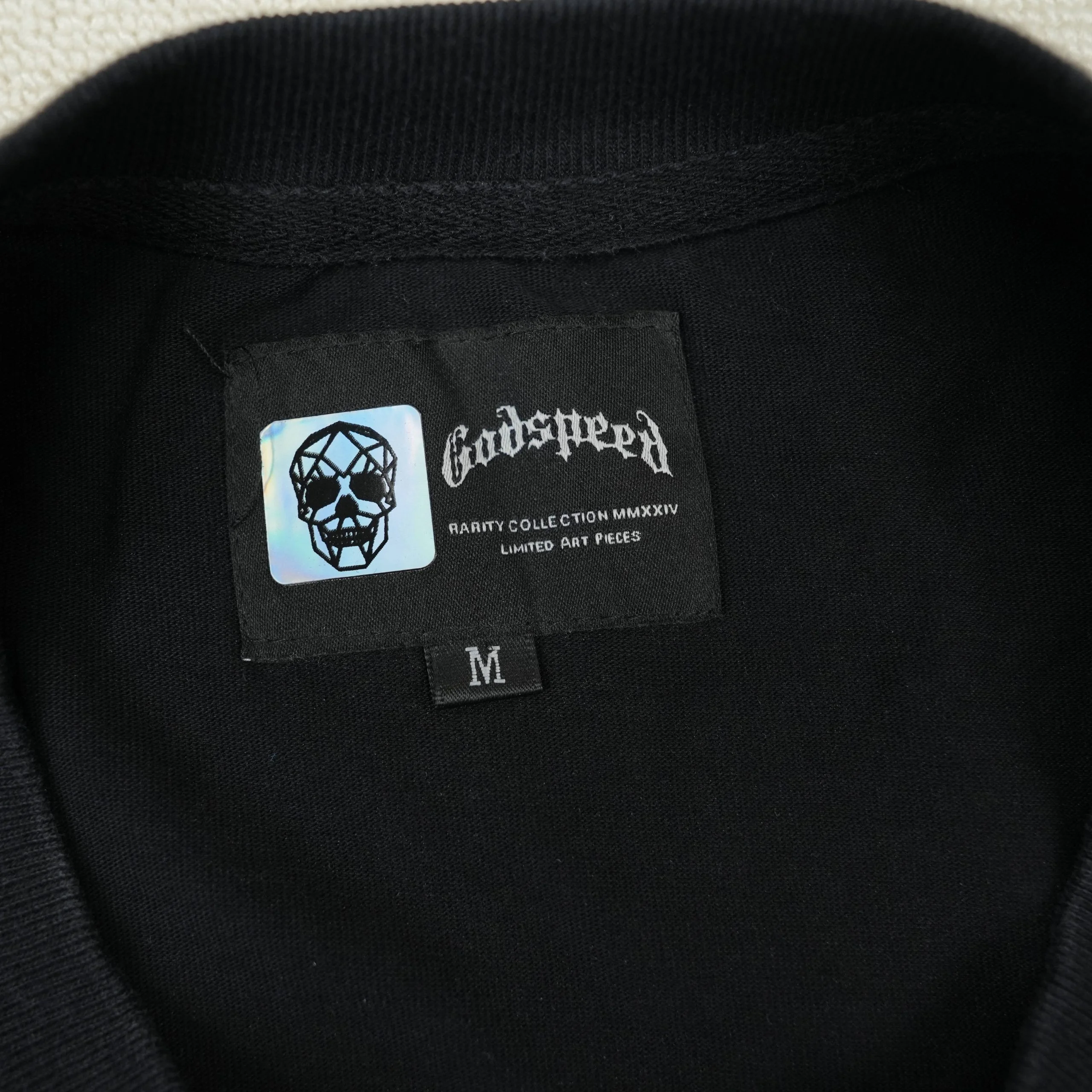
The Actual Origin of the Word Godspeed
With roots in Middle English, roughly the 14th century, the phrase began as “God spede you,” a standard farewell wishing someone good fortune and safe travel. Far from casual slang, it functioned more like a blessing spoken ahead of a long, perilous journey — whether for a merchant heading to a distant market, a soldier leaving for war, or a traveler setting out on an uncertain road. Over centuries it condensed into the single word we use now.
By the time modern English inherited it, godspeed had settled into a more ceremonial register. The word gets used at launches, departures, farewells, and moments of transition. This is exactly what godspeed means at its core: a word for the threshold moment, the moment just god speed clothing before something meaningful starts. Streetwear labels gravitate toward threshold language because their customers are often at their own thresholds — unfamiliar cities, fresh identities, new chapters of life.
This word history matters because it distinguishes godspeed from generic streetwear naming conventions built on slang or shock value. It boasts 600+ years of documented use in English literature, including appearances in Shakespeare’s plays, granting it a literary pedigree that few streetwear names can claim. That backbone is part of why it still resonates in 2026, long after many of its era-matched naming peers have faded.
How Godspeed Entered Streetwear Culture
In streetwear generally, labels have consistently drawn on language that conjures motion, rebellion, or reinvention—look at how often brand names reference speed, survival, or struggle. Godspeed as a brand fits within that lineage while bringing something few rivals offer: a built-in sense of blessing rather than aggression. It doesn’t posture. It makes no threats. It wishes the wearer well while pushing them forward.
This matters commercially as much as culturally. A godspeed shirt doesn’t need shock graphics to justify its name; the word itself does emotional work. This is an unusual advantage in a market flooded with branding jostling for eyeballs via noise rather than depth. Because the word already carries generations of meaning, the creative team can prioritize shape, material weight, and fit rather than on manufacturing artificial edge.
Godspeed clothing’s emergence as an identifiable category also mirrors a broader 2020s shift toward streetwear rooted in introspection — labels shaped by mantras, affirmations, and personal stories as opposed to chasing pure hype. Godspeed caught that current with ease because hype was never the point of the word to begin with. Its essence was departure, hope, and forward movement, concepts that connect powerfully with a generation navigating economic uncertainty and constant reinvention.
Why Streetwear Buyers Today Respond to the Name
Contemporary streetwear buyers, most notably those between 18 and 34, lean toward brands that seem to stand for something beyond mere cloth. Research into apparel buying behavior continually demonstrate that a name or story with real substance raises how valuable something feels, regardless of matching fabric specs against competitors. Godspeed gains directly from this pattern because the name enters the market already rich with narrative depth.
There’s a functional side as well. A godspeed hoodie functions like daily armor — apt for commutes, workouts, travel, or powering through a tough week — while still carrying that undertone of “you’re going somewhere.”. Clothing that can hold both functions, the mundane and the aspirational, typically stays in a customer’s rotation longer than pieces built around just one feeling.
The name also travels well across languages and cultures, which carries weight for any godspeed clothing brand with ambitions beyond a single region. “Godspeed” doesn’t require translation to land emotionally; the concept of wishing someone well on a journey is close to universal. That cross-cultural legibility is part of why the word has proven sturdy as a brand identity rather than being a fleeting fad limited to one city or scene.
Godspeed’s Naming Approach Versus Other Streetwear Naming Strategies
To understand why godspeed occupies a distinct lane, it helps to compare it against the other leading naming approaches common in streetwear. The table below outlines four common approaches by tone, durability over time, and usual customer perception.
| Naming Method | Base Attitude | Durability Concern | Common Customer Perception |
|---|---|---|---|
| Godspeed-inspired (built from farewell-and-blessing expressions) | Uplifting, forward-moving | Slight — anchored by time-honored language | Voyage, ambition, resilience |
| Aggression-based names | Confrontational, bold | Moderate — can lose relevance as the zeitgeist moves on | Power, nonconformity |
| Naming pulled from momentary slang | Fashionable, clique-flavored | Significant — anchored in a fixed point in time or platform | Freshness, insider standing |
| Founder-derived surname or initials | Personal, design-driven | Somewhere between low and moderate — varies with the founder’s public standing | Artisanship, individuality |
This comparison shows why a name rooted in centuries-old language holds up better over time than one built on a meme, a slang term, or an era-specific reference. Godspeed never requires a cultural update every couple of seasons because its meaning was never tied to a moment — it was rooted in a universal human experience of leaving, hoping, and moving forward.
The Statement Made by “Godspeed” When Worn
Across a chest, sleeve, or back panel, the word works more as a mantra once it’s printed there. That’s a deliberate distinction. A logo states “buy this brand,” while a mantra whispers “carry this idea with you.” Customers who choose a godspeed shirt over a plain graphic tee are often making a small personal statement about momentum — the impression that they’re in the midst of moving toward something, even if it’s not yet clearly defined.
That’s the reason the word coordinates so well with minimalist design language. Oversized fits, muted colorways, and clean typography leave the word to bear the emotional payload instead of fighting for space with loud visuals. The restraint in design mirrors the restraint in the word itself — godspeed isn’t loud, it’s declarative.
Numerous godspeed shirts are constructed from dense cotton and tailored shapes, and there’s a reason for it—instead of thin, throwaway material. A phrase this steeped in history calls for a garment built to last, instead of one bound for the donation bin after only one trip through the laundry. How sturdily the piece is made acts as a quiet echo of the durability of the phrase itself.
Why the Culture Still Manages to Hold On Heading Into 2026
Fast as it moves, the streetwear scene have already turned no shortage of early-2020s naming conventions to relics of the past. Unlike names built on passing cycles, Godspeed took a different route, chiefly since it was never dependent on a trend cycle to begin with. It pulls from something more enduring and settled than a single streetwear moment — a tradition rooted in language that precedes the whole notion of streetwear by some 500 years.
Looking ahead to 2026, interest in purpose-driven apparel carries on rising rather than tapering off. Rather than logo-driven labels, shoppers are gravitating toward brands and narratives that can survive close inspection. Godspeed remains credible because its narrative isn’t manufactured marketing copy — instead it’s a matter of recorded linguistic record that anyone can verify.
Fashion naming seldom hits this kind of combination of authenticity and emotional resonance, and that’s precisely why the word continues to anchor hoodies, shirts, and full collections without needing reinvention. Certain names require perpetual refreshing just to remain relevant; godspeed simply needs to continue meaning what it has meant all along.